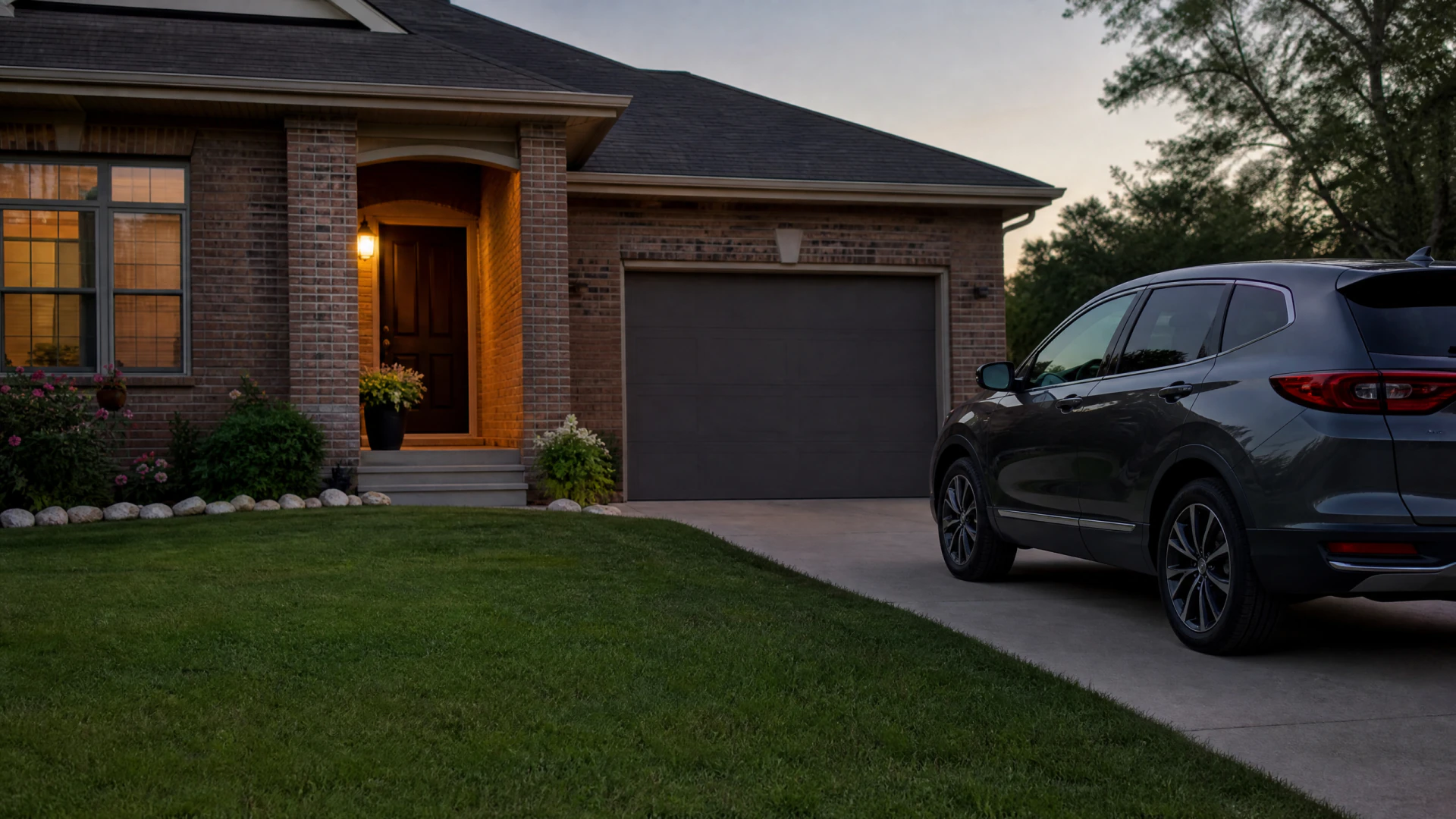
Can I Insure Two Cars at Different Addresses
You can insure two cars at different addresses as long as you tell your insurer the truth about where each one actually lives.
Insurers price each car by where it actually spends its nights
A car insurance policy is really a set of promises tied to a location. Insurers use the address where a car is garaged to judge things like theft risk, weather exposure, local accident rates, and how far the car typically travels. When two cars on one policy live at different addresses, that's not unusual. It happens with couples who split time between homes, kids away at school, cars kept at a second property, or a vehicle someone else drives regularly.
What matters is that each car is listed with its correct garaging address, not necessarily the address on your driver's license. Insurers ask for this separately from your mailing address because the two don't have to match. If one of your cars sits in a driveway three states away for most of the year, that address is the one that should be on file for that car.
This changes how the math works underneath your policy. A car garaged somewhere with less traffic or lower theft rates might cost less to insure than one kept in a busier area, even under the same policy and the same policyholder. Insurers calculate each vehicle's risk independently, so you shouldn't expect one blended rate across both cars.
Where this gets more complicated is when the second address is in a different state. Some insurers only operate in certain states, and insurance requirements themselves vary by state. If your two cars are garaged in different states, check whether your current insurer writes policies in both, and whether you might need two separate policies instead of one. A local agent or your insurer's underwriting team can tell you how they handle it.
Do I need two separate policies if the addresses are in different states?
Sometimes, and it depends on your insurer. Many large insurers operate across state lines and can keep both cars on one policy even when the garaging addresses are in different states, as long as they're licensed to write policies in both places.
Other insurers only operate regionally or within a single state, which means a second car garaged elsewhere might need its own policy with a different company entirely. Check with your insurer directly rather than assuming either way. If you do end up needing two policies, ask about whether you still qualify for any multi-car consideration, since some insurers extend that even across separate policies.
The address you give for each car, not your own home address, is what actually sets that car's rate.
Once you know how each car's address affects its rate, compare quotes to see what both would cost together.

Do you report each car's real garaging address
If you do
Your insurer prices each car based on where it actually sits most nights. Your coverage holds up if something happens, since the facts on file match reality. If rates differ between the two cars, you'll understand why, and you can shop each one separately if needed.
If you don't
If a car is routinely kept somewhere other than what's listed, a claim could be investigated more closely or even questioned. Misreporting an address is treated like misreporting any other risk factor. It can affect how smoothly a claim gets paid, even if the mistake wasn't intentional.
What to sort out before you call your insurer
- Confirm each garaging address Figure out exactly where each car sleeps most nights, not where you receive mail. This is the address your insurer needs for accurate pricing.
- Check state licensing If the two addresses are in different states, ask your insurer if they're licensed to write policies in both. If not, you may need a second policy elsewhere.
- Ask about multi-car pricing Some insurers still offer a multi-car consideration even when cars are garaged at different addresses. Ask directly rather than assuming it disappears.
- Update who drives which car If someone else primarily drives the second car, tell your insurer. Driver assignment affects pricing separately from the garaging address.
- Review coverage limits per car Each car can carry different coverage levels depending on its age, value, and location. Decide what each one actually needs instead of defaulting to identical coverage.
A second car kept at a parent's house two states away
Someone owns a car they drive daily in the city where they live, and a second car kept at a parent's house in another state, mostly for visits a few times a year. When they called their insurer to add the second car, the agent asked for the actual address where it stays most of the time, not the policyholder's own address. They gave the parent's address, and the insurer checked whether it was licensed to write policies in that state.
It was, so both cars stayed on one policy, but priced separately based on each location's risk factors. The second car, garaged in a quieter area with less traffic, ended up costing less to insure than the daily driver. The policyholder also asked about multi-car pricing and found it still applied even though the cars lived in different states. The whole process took one phone call, and the only real work was getting the second address exactly right.